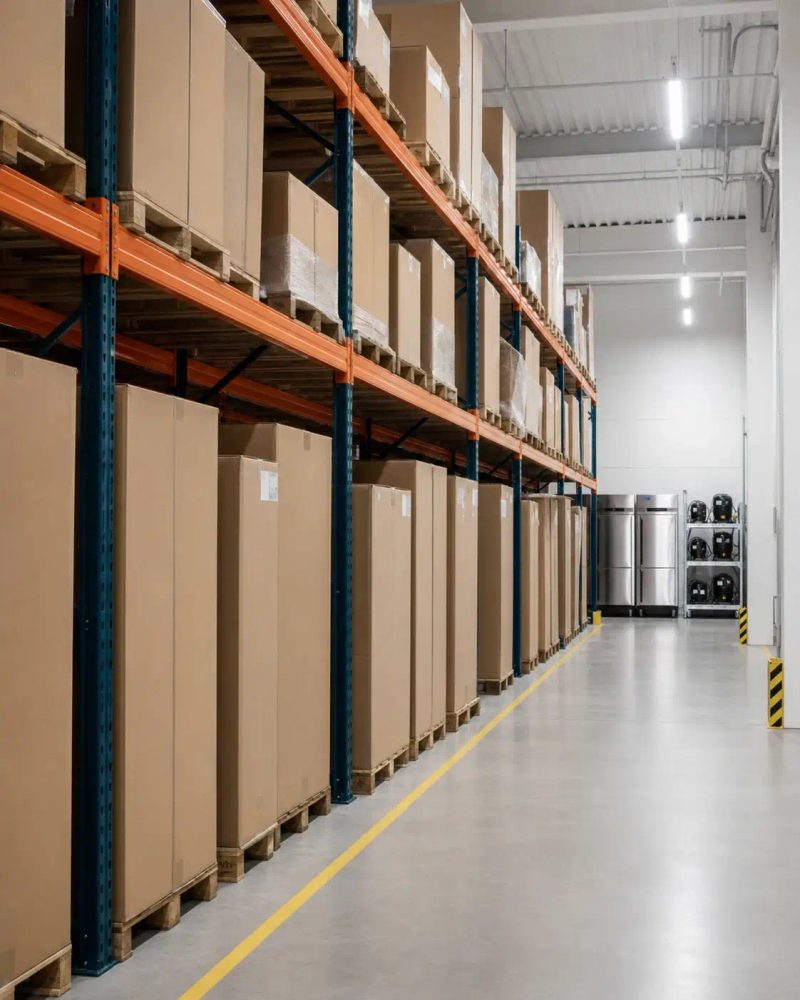
Panels
Polyurethane panels, thickness chosen for the temperature.
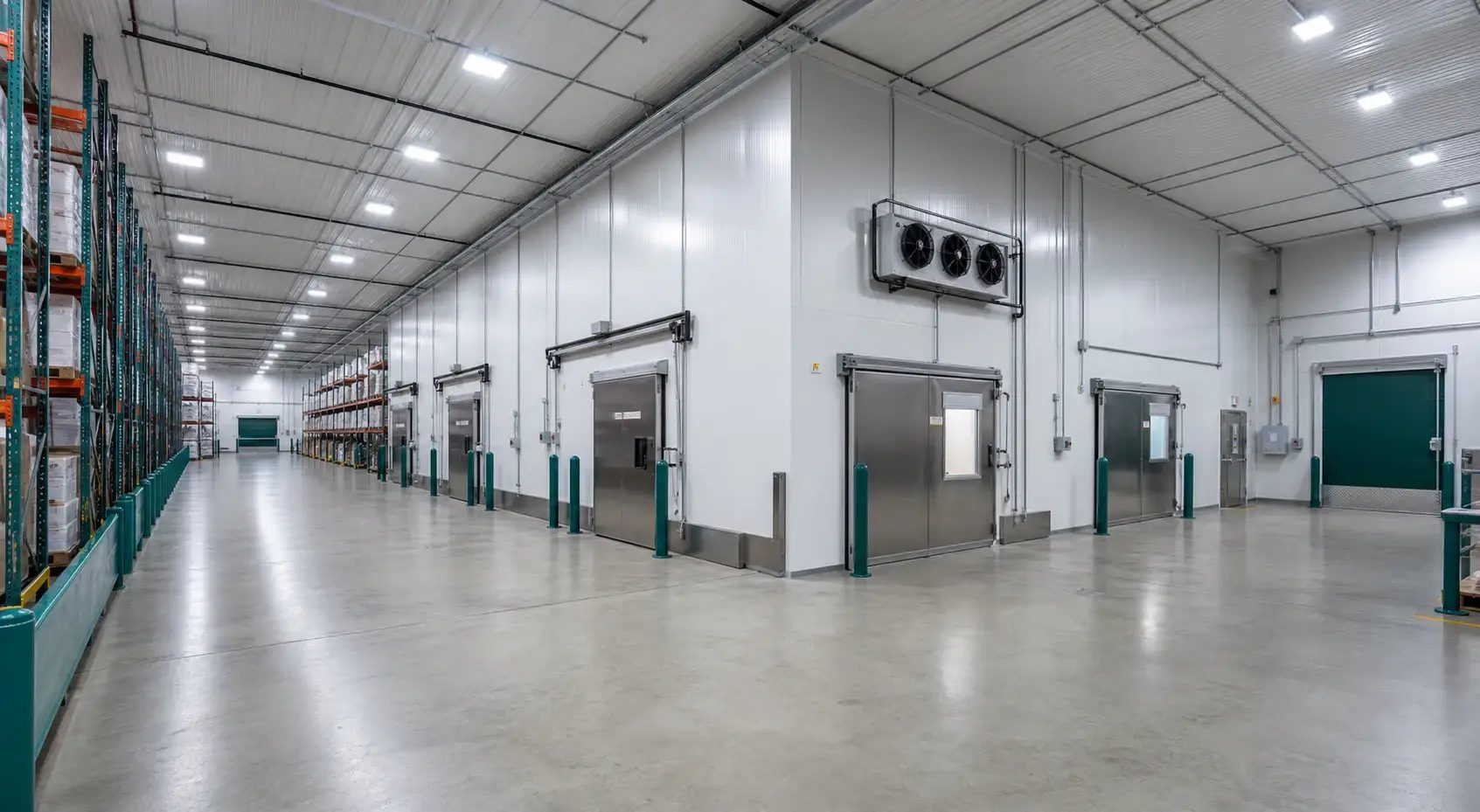
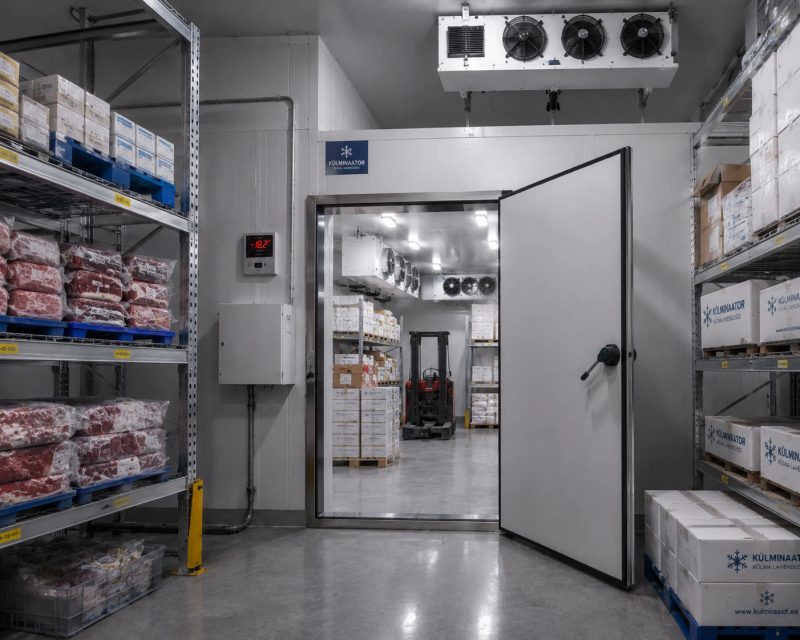
A cold room, or chiller room, is built for a specific space and specific goods. First we find out what will be stored and how much, the temperature needed and how often the door will be opened. That decides the panel thickness, door, floor solution and condensing unit capacity.
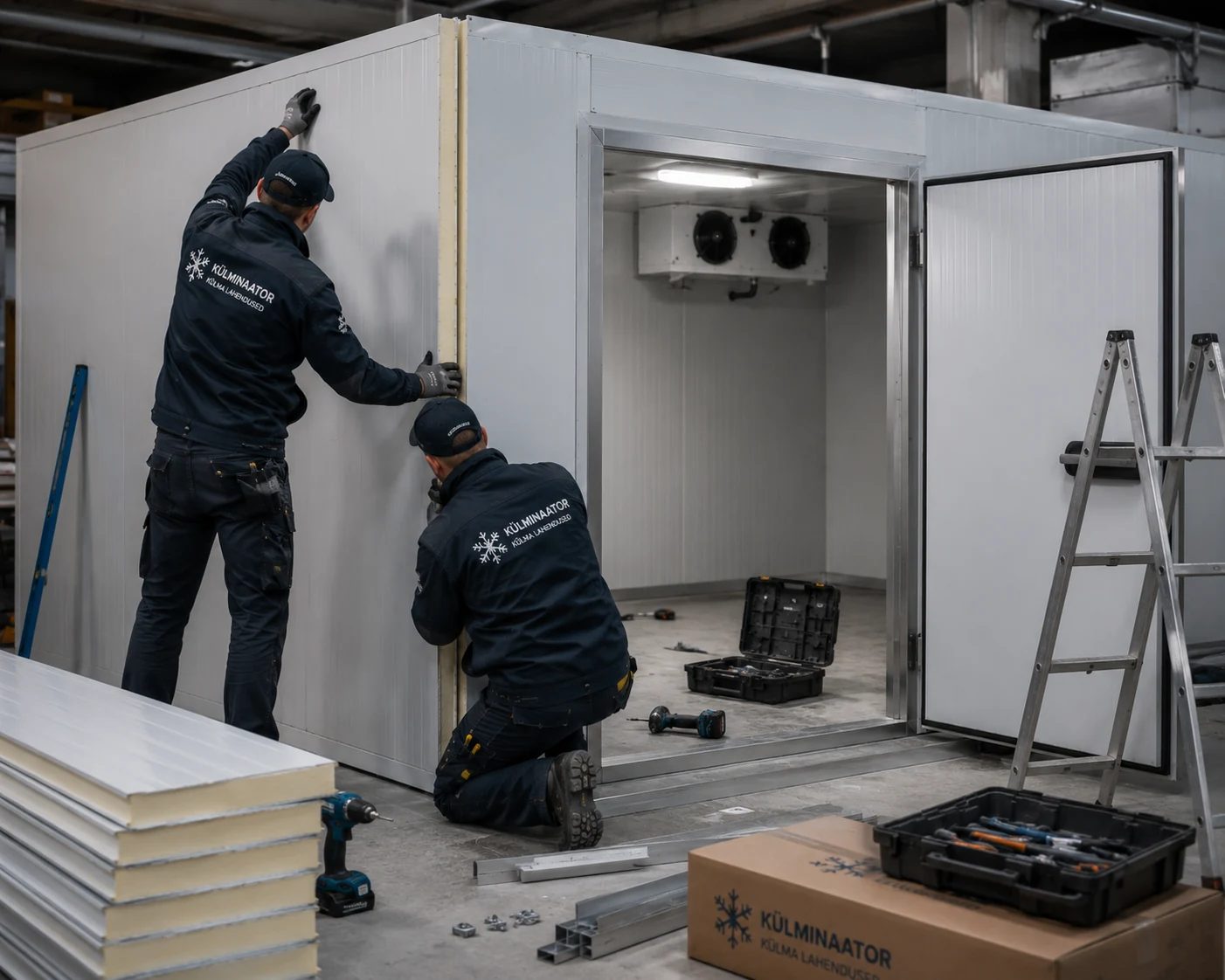
The room is assembled from polyurethane panels. Cooling comes from a monoblock unit mounted on the room wall, or from a separate condensing unit whose outdoor part can go in another room or outside.
We measure the room and check the electrical connection and the location of the condensing unit.
Room, cooling, installation and schedule in one quote.
Panels, door, cooling unit and connections.
Commissioning of the cooling, set-up and handover.
Polyurethane panels, thickness chosen for the temperature.
Hinged or sliding door, wide enough for the goods you bring in.
An insulated floor or a solution for the existing floor.
Monoblock unit or separate condensing unit, sized for the room volume and temperature.
A cold room is suitable for storing fresh goods, drinks, flowers and prepared food. A freezer room keeps frozen goods below zero and therefore needs thicker panels, a different door and more cooling capacity.
The temperature in a cold room is usually between 0 and +8 °C: meat, fish and prepared food need the colder part of this range, while vegetables, drinks and flowers can be kept in the warmer part. A freezer room is usually kept between minus 18 and minus 25 °C.
Above zero, panels are usually 80–100 mm thick; below zero, usually 100–150 mm. Above zero, the existing floor does not always have to be redone, but below zero the floor must be insulated, otherwise the base freezes and the floor can heave. The door frame of a freezer room has a heater so that the door does not freeze shut.
You can order a cold room for a restaurant, shop, bakery, flower shop, production site or warehouse. You will find ready-made models and parts in the cold rooms product group. If the room is part of a larger project, see project sales and completed work. For a finished room you can also arrange planned maintenance.
The choice depends on the room size, the temperature and where the condensing unit will be installed. At the end of the installation we start the cooling, set the temperature and check that the room reaches the specified temperature. See also condensing units, outdoor condensing units and compressors.
A condensing unit is a set of compressor, condenser and fan that carries away the heat taken from the room. Condensing units for cold rooms are usually air-cooled: the heat goes into the surrounding air, so air must be able to move freely around the unit. When choosing a condensing unit, take into account:
A condensing unit that is too small runs non-stop and cannot cool the room. One that is too large switches on and off often and wears out faster.
A monoblock unit is charged with refrigerant at the factory and no pipework is built on site. With a separate condensing unit, the pipework, leak check and charging of the system with refrigerant are done on site. Send the room dimensions, the operating temperature and where the condensing unit will be installed, and we will help you choose a unit of the right capacity.
The price depends on the room dimensions, temperature, panel thickness, door type, floor and cooling, so we base the quote on the space and what you need. Send the room dimensions (length, width, height), the temperature you want, the type and quantity of goods, where the condensing unit can be installed and a photo of the space. Say whether you use trolleys, shelving or pallets: this decides the doorway and floor solution.
Check whether the price includes the condensing unit, floor, door, shelving, lighting, installation and commissioning, and whether it is with VAT. Some rooms are sold without a condensing unit. Also check who does the preparatory work: the electrical connection, the drain and the wall penetrations. If you get quotes from several suppliers, ask them all for the same scope of work.
Take into account the quantity of goods, the package sizes, shelving, working space and how often stock is added. Also mention any expected growth in your request, so that the layout and cooling can reflect actual use.
In most cases, yes: a panel-built cold room is assembled inside an existing space, such as a warehouse corner, a shop back room or a restaurant cellar. With 100 mm panels, internal dimensions are 20 cm smaller than external ones in length and width. Check the base, ceiling height, access for the panels and for maintenance, and where the unit can give off its heat. We clarify power, drain and ventilation requirements before work starts. Send the room dimensions and a photo.
A cold room is a panel-built refrigerated space inside a building or under a shelter. A cold store is a larger building or part of one for chilled or frozen goods, often with several rooms at different temperatures. If you need several rooms for a warehouse or production, send a floor plan and a description of what you store and how much, and we will tell you whether and how we can help. For a complete solution, see project sales.
Timing depends on the room size, component availability and how ready the site is. In the quote we clarify the delivery, installation and commissioning stages. Include your target completion date in your first request.
The cold room and materials installed by us carry a 12-month warranty, unless the sales documents say otherwise. The exact terms are on the warranty page.
We carry out planned cold room maintenance and repairs ourselves. At handover we clarify questions about use and further maintenance.
Describe what you need and include your contact details. We will get in touch to clarify the next steps.